
Table of contents
Understanding Knee Replacement Surgery
Knee replacement surgery, also known as knee arthroplasty, is a commonly performed procedure aimed at alleviating pain and improving function in patients suffering from severe knee arthritis or injury. The decision to pursue knee surgery typically arises after conservative treatments, such as physical therapy, medication, or injections, have failed to provide adequate relief. This surgical intervention is particularly essential when the knee joint is significantly deteriorated, leading to increased pain and reduced mobility.
The knee joint itself is a complex structure that includes bones, cartilage, ligaments, and fluid, working together to allow movement while bearing weight. The primary components of the knee joint include the femur (thigh bone), tibia (shin bone), and patella (kneecap). Degenerative conditions, such as osteoarthritis, can result in the breakdown of cartilage, causing bones to rub against each other and leading to pain, stiffness, and swelling.
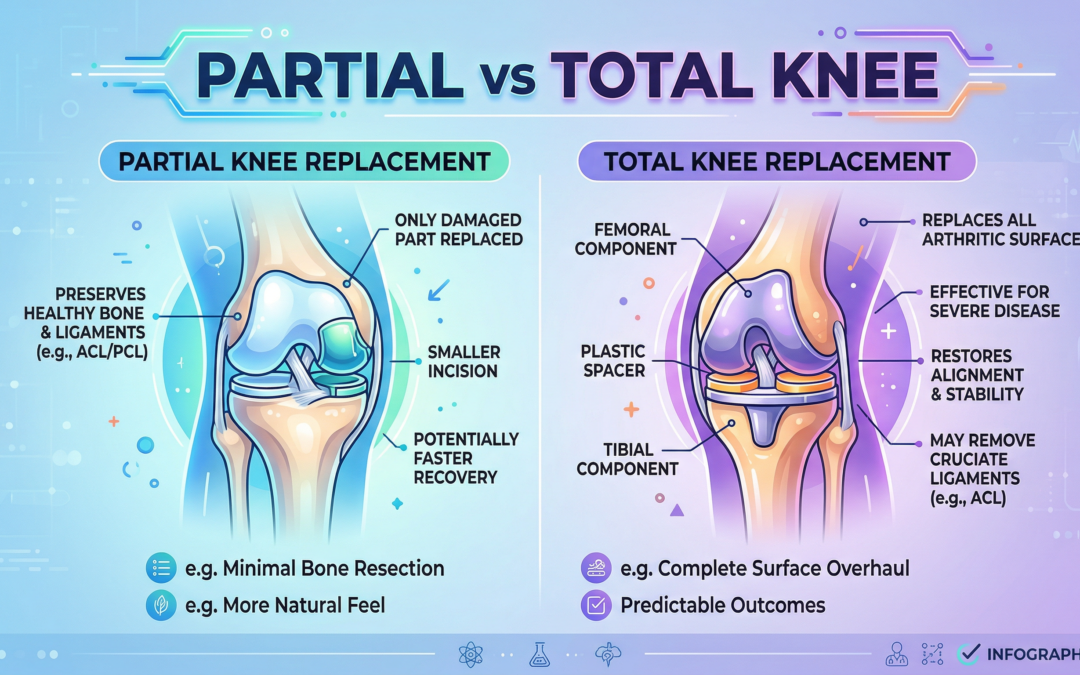
There are two main types of knee replacement surgery: partial knee replacement and total knee replacement. A partial knee replacement involves the surgical replacement of only the damaged compartment of the knee, which can be beneficial for patients experiencing localized arthritis. On the other hand, total knee replacement involves the removal of the entire knee joint surface and its replacement with artificial components. The choice between partial and total knee replacement depends on various factors, including the patient’s age, activity level, and the extent of joint damage.
Ultimately, the goal of these knee surgery types is to restore function and alleviate pain, allowing patients to return to their daily activities and improve their quality of life. Understanding the differences between partial vs total knee replacement is crucial for individuals considering the best knee replacement option for their unique circumstances.
Indications for Partial vs Total Knee Replacement
Determining the appropriate knee surgery type for an individual typically relies on the extent of joint damage, the alignment of the knee, and the patient’s activity level, among other factors. A detailed evaluation of these considerations can help identify whether a partial vs total knee replacement is the best knee replacement option for a patient.
Partial knee replacement may be indicated for individuals with localized damage to the knee, particularly in one compartment of the joint. This procedure is more commonly suitable for younger patients or those with a specific type of arthritis, such as osteoarthritis, that affects only a particular area of the knee. Patients who have maintained good knee alignment and possess adequate range of motion may also benefit from this approach, as it conserves healthy bone and ligaments, thus promoting a faster recovery and preserving natural knee function.
Conversely, a total knee replacement may be recommended for those suffering from extensive damage across multiple compartments of the knee joint. Conditions such as advanced osteoarthritis, rheumatoid arthritis, or significant joint deformities often necessitate this more invasive procedure. Furthermore, age plays a crucial role; while total knee replacement is frequently performed on older adults who have exhausted conservative treatments, younger patients may require a tailored approach based on activity levels and expected outcomes.
Ultimately, the decision between partial and total knee replacement relies not only on the technical aspects of the knee surgery types but also on comprehensive assessments of the patient’s overall health and lifestyle. A personalized approach ensures that the selected procedure aligns with the individual’s recovery goals and functional needs, paving the way for an optimal outcome.
Benefits of Partial Knee Replacement
Partial knee replacement is increasingly regarded as a favorable option among various knee surgery types, particularly for patients suffering from localized knee arthritis. One of the primary advantages of this procedure is its less invasive nature. Unlike total knee replacement, which necessitates the removal of most of the knee joint, partial knee replacement only targets the damaged compartment, leading to minimal disruption of surrounding tissues. This technique significantly reduces the trauma to the knee, which can be especially beneficial for active individuals seeking to maintain mobility during recovery.
Furthermore, the recovery times associated with partial knee replacement are often quicker than those of total replacements. Many patients find themselves able to bear weight on the treated knee shortly after surgery, which can lead to a shorter rehabilitation period. Studies have shown that many individuals can return to regular activities within weeks, rather than months, compared to those who undergo total knee surgery.
Another considerable benefit of partial knee replacement is the preservation of knee function. Because the procedure only replaces the damaged area, patients frequently retain more natural knee motion and strength. This aspect of partial replacement can be particularly advantageous for younger patients or those with an active lifestyle, as it minimizes the long-term impact on their physical capabilities.
Lastly, post-operative pain tends to be less severe for patients undergoing partial knee replacement. Reduced pain levels can lead to a more comfortable recovery experience and might even decrease the need for opioid painkillers, which is an important consideration in today’s medical landscape. Ideal candidates for this procedure typically include those with isolated arthritis in one or two knee compartments and those who have not found relief through conservative treatments.
Benefits of Total Knee Replacement
Total knee replacement (TKR) surgery presents numerous advantages over its counterpart, partial knee replacement. One primary benefit of TKR is the significant improvement in pain relief experienced by patients. For individuals suffering from severe arthritis or widespread cartilage damage, total knee replacement can effectively eliminate or greatly reduce debilitating pain, leading to a marked enhancement in quality of life.
Another crucial benefit of total knee replacement is the restoration of joint function. With the complete removal of damaged cartilage and bone, TKR facilitates improved mobility. Patients often report greater ease in performing daily activities such as walking, climbing stairs, and engaging in recreational activities. This advantage makes TKR an essential option for patients with extensive knee degeneration, where partial knee surgery may not provide the necessary level of support or improvement.
Furthermore, total knee replacement is best suited for those experiencing limitations due to numerous factors, including obesity or those who have significant misalignment of the knee joint. By addressing the entire knee mechanism, TKR ensures a more stable and aligned joint, which not only provides better function but also contributes to the overall longevity of the prosthetic joint.
Long-term satisfaction rates associated with total knee replacement are noteworthy. Many studies reveal that patients report high levels of satisfaction years after surgery, indicating that TKR can lead to lasting benefits. The potential for improved functionality and pain relief positions total knee replacement as a favorable choice compared to other knee surgery types, particularly for candidates with extensive joint issues.
Risks and Complications of Each Procedure
Both partial and total knee replacements, while generally safe and effective procedures, carry certain risks and complications that patients should be aware of prior to surgery. Surgical risks, including infection and blood clots, are common concerns. Infections can occur at the incision site or within the joint itself, potentially leading to further complications. Blood clots, particularly in the legs, can develop after surgery and may necessitate additional interventions or prolonged recovery.
Moreover, complications arising from anesthesia also warrant consideration. Some patients may experience adverse reactions to anesthetic agents, which can complicate the surgical experience. Therefore, a discussion with the anesthesiologist beforehand is critical for identifying any personal risk factors.
Long-term risks associated with knee surgery types, including partial vs total knee replacement, should not be underestimated. One significant risk is joint instability, where the knee may feel wobbly or unable to bear weight appropriately. This instability can lead to increased pain and reduced functionality, impacting one’s quality of life. Another potential long-term complication is the need for revision surgery. Research indicates that while partial knee replacements may necessitate fewer revisions over time compared to total knee replacements, the risk is still present in both procedures. Patients may ultimately require additional surgery to address persistent pain or malfunction of the implant.
Ultimately, the choice between partial vs total knee replacement should account not only for immediate surgical risks but also for the long-term implications, including potential revisions. A thorough discussion with an orthopedic surgeon can aid in determining the best knee replacement option based on individual patient needs and risk factors, ensuring a comprehensive understanding of what to expect post-surgery.
Recovery and Rehabilitation Process
Following partial versus total knee replacement, the recovery process is crucial for restoring mobility and reducing pain. Typically, the recovery timeline varies between the two types of knee surgeries, with partial knee replacements generally offering a shorter recovery period. Patients can expect to spend a few days in the hospital post-surgery, after which they may begin their rehabilitation process.
A significant component of recovery involves physical therapy. It is vital for regaining strength and mobility in the affected knee joint. Therapists will design a personalized rehabilitation program that includes exercises tailored to the specific knee surgery type. Initially, range of motion exercises are introduced, often starting on the same day as the surgery, to prevent stiffness and promote healing. As progression occurs, more strength-building activities are integrated.
Pain management plays a crucial role in the recovery phase. Patients may be prescribed pain medications to manage discomfort effectively, with the goal of enabling them to participate fully in their physical therapy sessions. It’s important for patients to communicate openly with their healthcare providers about their pain levels to adjust medications as needed.
Key milestones during recovery include being able to bend the knee, walk without assistance, and gradually return to daily activities. Most patients can expect to return to low-impact sports within a few months, although high-impact activities may require more time and consideration of the best knee replacement option.
Patients should aim for realistic expectations during their rehabilitation, as full recovery can take several months to a year, depending on individual health factors, the specific knee surgery type, and adherence to rehabilitation protocols. Monitoring progress with healthcare providers will ensure that patients remain on track throughout their recovery journey.
Cost Considerations and Insurance Coverage
When evaluating the financial implications of knee surgery types, particularly the options of partial vs total knee replacement, patients often face various cost-related challenges. The average costs for these procedures can significantly differ based on multiple factors, including the geographical location, healthcare facility, and the complexity of the surgery.
Generally, the cost of a total knee replacement tends to be higher than that of a partial knee replacement. For instance, average prices for total knee replacements can range anywhere from $30,000 to $50,000, whereas partial procedures may cost between $15,000 and $30,000. These variations are influenced by factors such as the surgeon’s expertise, the type of implant used, and post-operative care requirements. Additionally, the need for extended rehabilitation following total knee replacement can further increase the overall financial burden.
Insurance coverage plays a critical role in mitigating costs associated with knee surgery. Most health insurance plans, including Medicare, typically cover a significant portion of the expenses related to knee replacements, whether partial or total. However, coverage specifics can vary widely based on the insurance provider and the patient’s policy. It is advisable for patients to check with their insurance companies to understand what is covered and what out-of-pocket expenses they might incur.
Moreover, patients should also consider preauthorization requirements as they could affect the approval for the surgery and associated costs. Understanding the best knee replacement option for their personal health situation can contribute not only to better physical outcomes but also to improved financial planning. Patients may also want to explore financing options provided by hospitals to ease the recovery costs.
Patient Case Studies and Testimonials
Understanding the differences in outcomes between partial and total knee replacement can best be appreciated through patient narratives. Each patient’s experience is unique, influenced by factors such as the specific knee surgery type performed, their health status before surgery, and their expectations from the procedure.
Consider the case of Jane, a 62-year-old avid gardener who opted for partial knee replacement after experiencing significant wear in one compartment of her knee. Post-surgery, she reported a remarkable improvement in her ability to kneel and bend, effectively returning to her gardening activities within months. Jane noted that her decision was guided by her desire for a less invasive procedure, which she felt would allow quicker recovery and greater preservation of natural knee functionality. Her testimony highlights how partial knee replacement may serve as the best knee replacement option for patients with localized arthritis.
On the other hand, we have Mark, a 70-year-old who chose total knee replacement due to arthritis affecting multiple compartments of his knee. Despite initial apprehensions about the length of recovery associated with total knee replacement, Mark has experienced substantial pain relief and enhanced mobility. He shared that, after three months of rehabilitation, he could participate in family activities and even walk without the aid of a cane. His journey underscores the importance of addressing all areas affected by arthritis, pointing to total knee replacement as a more comprehensive solution in cases of widespread joint deterioration.
These contrasting experiences provide valuable insights into how patient circumstances can influence the choice between partial vs total knee replacement. Prospective patients are encouraged to thoroughly discuss options with their orthopedic surgeons, considering their own lifestyle and the extent of knee damage before making decisions about which procedure will best meet their needs.
Conclusion: Making the Right Choice for You
Choosing between partial vs total knee replacement is a significant decision that should be tailored to each patient’s unique circumstances. Throughout this article, we have explored various aspects of knee surgery types, highlighting the differences, advantages, and disadvantages of both partial and total knee replacements. By understanding the nuances of these procedures, patients can make more informed decisions regarding their knee health.
One of the most crucial factors in determining the best knee replacement option is the specific condition of the knee joint and the extent of damage present. For individuals with localized joint issues, partial knee replacement may provide an effective solution that preserves more of the natural knee structure. Conversely, those experiencing widespread deterioration may find that total knee replacement is necessary to relieve pain and restore function. This emphasizes the importance of personalized medical advice, as every case is distinct.
It is essential for patients to engage in comprehensive discussions with their healthcare providers, as this dialogue will provide nuanced insights tailored to their individual needs. Surgeons can assist in teasing out the complexities of each option, weighing factors such as activity level, age, overall health, and the expectation of post-operative recovery. This collaborative approach ensures that the chosen knee surgery type aligns not only with medical necessity but also with the patient’s lifestyle and recovery goals.
In conclusion, making an informed choice between partial and total knee replacement is pivotal. With the right information and support from healthcare professionals, patients can select the surgical intervention that maximizes their quality of life and promotes long-term joint health.